Meet New Zealand’s first female trauma surgeon
By MAS Team
By MAS Team
New Zealand’s first female trauma surgeon, Dr Savitha Bhagvan, has witnessed many life-and-death moments during her 30-year career. She talks to Sophie Neville about human resilience, healthcare inequity and staying grounded amid the chaos.
Most of the people who end up in the care of Auckland trauma surgeon Dr Savitha Bhagvan start their day just like any other.
Her patients are often in the prime of their lives. They might have dropped their children at school, driven to work, gone for a run, climbed a ladder, crossed a road or hopped on a bus. Then something happens. A car crash. A fall. A violent encounter. A split-second event that turns an ordinary day into a medical emergency, the patient and their families’ worlds turned upside down.
By the time they are in the care of Savitha and her team, lives can be hanging in the balance.
For MAS Member Savitha, New Zealand’s first female trauma surgeon, helping to put shattered lives back together is what continues to inspire her. Nearly 3 decades into her career, she still considers it a privilege to be trusted with patients’ care at one of the most devastating and vulnerable moments of their lives. It is work that has given her a front-row seat to both the fragility of life and the extraordinary resilience of the human spirit.
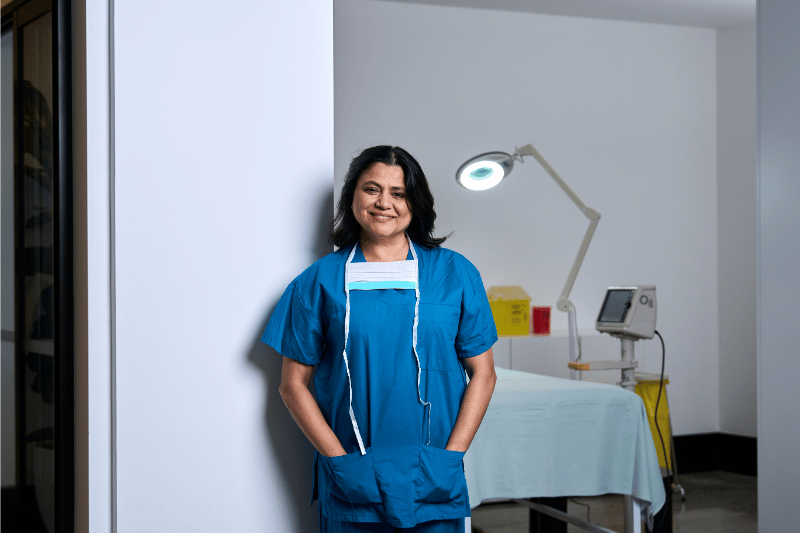
“I see people and their families in what is usually the worst time of their lives. But what I’ve learned is that humans are truly amazing,” she says. “We are survivors, you know? No matter what hits us, human beings find a way to get on with life. And you can't break that. It makes me very optimistic.”
The 53-year-old can still pinpoint the moment as a trainee doctor that she fell in love with surgery: Savitha was 18 months into medical school, and on her first day of clinical training at a hospital in Bengaluru, India, she watched her professor remove a thyroid cancer.
“I thought, ‘How cool is that?’ There was a problem, and he went and fixed it,” she recalls. “It completely made sense to me. I thought, ‘Right, that’s it. That’s what I want to do.’ I was hooked.”
Now, Savitha is one of New Zealand's leading trauma specialists. Alongside her work as a Trauma and Acute Care Surgeon at Auckland City Hospital, she leads the Northern Region Trauma Network, helping coordinate care across the upper North Island. She also helps to teach and train the next generation of trauma clinicians, and spends several days each month operating in private practice.
At home she’s raising a 16-year-old daughter with her husband, who is a heart and transplant surgeon. “There is quite a bit to juggle,” Savitha says with a laugh.
There is no such thing as a typical day for Savitha. When she’s on a trauma take at Auckland City Hospital, she arrives at 7:30am and “waits for something to happen. Invariably it always does.”
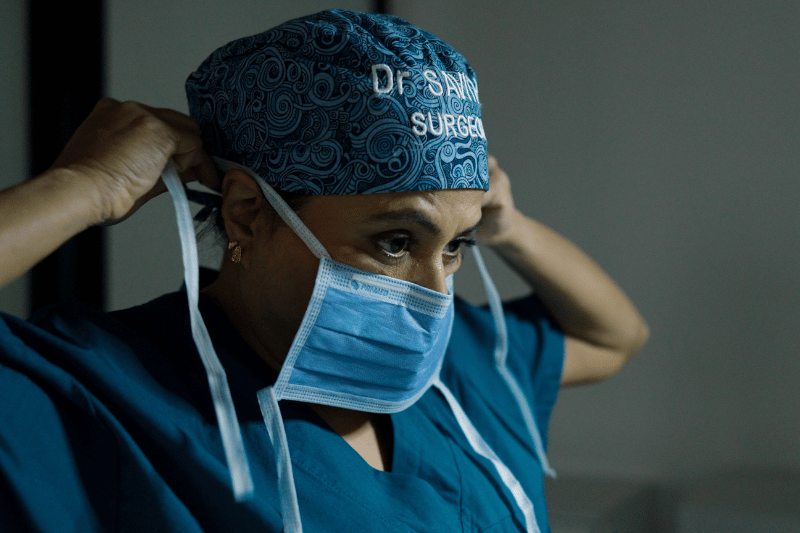
Based in the Surgical Department, Savitha and her team are alerted to an incoming trauma case – often patients with the most catastrophic injuries – by a pager system. When the patient arrives, “everything comes together very quickly”.
Savitha and her team enter what she calls ‘the zone’. The focus narrows, the noise fades. The room seems to slow down as they rapidly sort through injuries, risks and possibilities and make a plan. She believes trauma surgeons are wired a little differently; they can access a level of focus and calm amidst total chaos.
“It’s a bit like changing a tyre in Formula 1. Everything happens as it should, you’re focused in on the task and you block everything else out.”
After an initial ‘damage control’ surgery, treatment is often a multi-step approach. But being at a patient’s side from the very start until the end of their recovery is the most fulfilling part of her role, she says. This can sometimes take weeks or months.
“It’s the best feeling in the world when someone survives after they were expected to die. It’s hard to explain what it feels like to be part of, but you get a real high from that.”
Savitha’s journey into medicine happened almost accidentally. As a high school student she applied for – and was accepted into – both engineering and medical school, and she opted for medicine.
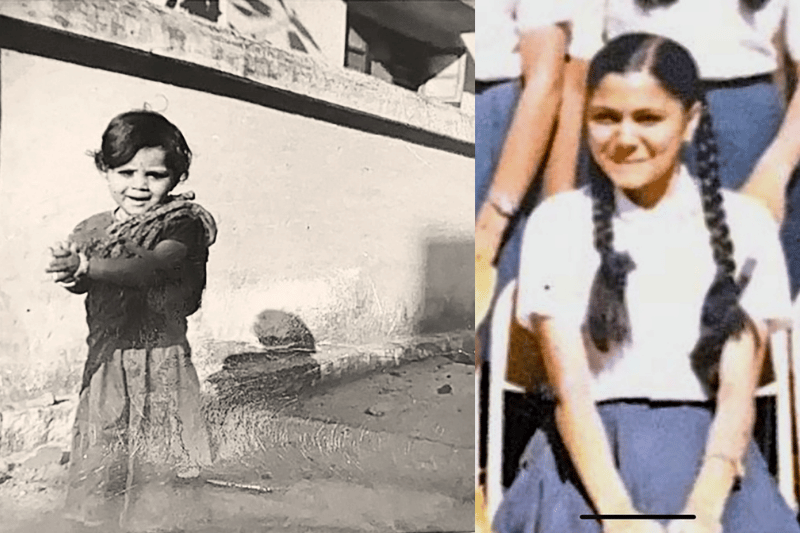
It was a learning experience in every sense of the word. Seeing her first cadaver was confronting, but so too was the poverty she’d been shielded from growing up in a middle-class family with educated parents. She recalls a moment early on when a poor family faced a decision no parent should ever face.
“They had a child with fairly advanced cancer, and she needed chemotherapy. But if they’d stayed in hospital for the treatment, it would have meant leaving their other children alone in their village with no food or care. If they didn’t work, there was no money, and there was no social security. In the end, they had to take their daughter home, knowing she would die, in order to save their other children.”
The experience left a lasting impression. It was one of many moments during her training that exposed her to the realities of poverty and inequality, and how profoundly they shape health outcomes. It was a lesson that continues to inform the way she views healthcare today.
“The poor and the disadvantaged always suffer, the world over,” she says. “They start off with poorer nutrition, poorer education, and that feeds into disease and poorer health outcomes throughout their lives. We need better prevention, better input into social problems.”
After graduating as a doctor, Savitha undertook surgical training, where she met her husband. In 2003, the pair moved to New Zealand so the heart surgeon could gain experience at the Green Lane Cardiothoracic Unit – which was famous for its pioneering heart surgery. They expected to stay for a year, but 23 years later, New Zealand is firmly home.
“We love it here,” says Savitha. “We are Kiwis.”
Their daughter was 5 years old when Savitha completed post-fellowship trauma training at Sydney’s Westmead Hospital, becoming the first woman in New Zealand to be appointed as a trauma surgeon in a tertiary trauma centre. Since then, she has helped shape trauma care in this country and, in 2022, was awarded Fellowship of the American College of Surgeons.
When Savitha began her career, surgery was still widely regarded as a male-dominated field. Today, she’s delighted to see women entering the profession in equal numbers and takes great satisfaction in mentoring the next generation of surgeons. She is equally passionate about the collaborative nature of trauma care, and not just in the operating theatre or wards, but with the emotional burden of the work. “We debrief after big events, we talk things through and help each other,” she says. “We’ve all got a lot better at that.”
For all the calm she brings to her work, Savitha is quick to dismiss any suggestion that years in the job have made her immune to its emotional toll. Telling families a loved one hasn’t made it is still the hardest part of her job.
“Sometimes you’re just struck by how unfair life is. When young lives have been cut short, and they did absolutely nothing to deserve that. It’s one thing getting older, having diseases and reaching the end of your life. It’s another thing when someone in the prime of their life loses everything. And the family left behind have to carry on for the rest of their lives. That’s heartbreaking.”
Savitha’s work also gives her a unique window into the changing nature of trauma in New Zealand. When she first began working here, the vast majority of serious trauma cases stemmed from motor vehicle crashes. While these remain a significant cause of injury, she has noticed an increase in violence-related trauma over the years, particularly cases involving firearms as well as serious domestic violence.
“It’s very sad,” she says. “People are under pressure.”
For Savitha, cooking, sewing, spending time with family, hiking, meditation and running all help her to unwind. Yet she admits that working in trauma has changed the way she sees her own life. Spending every day confronted by how quickly things can change has given her a heightened appreciation for the people she loves.
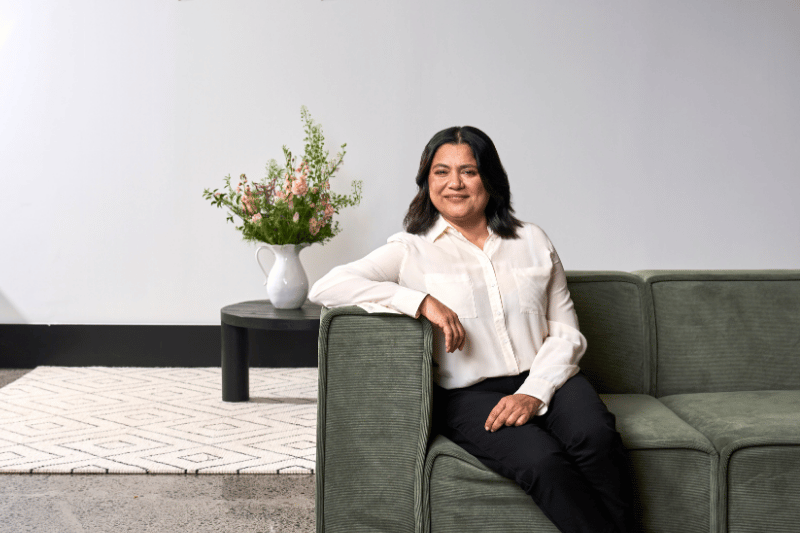
“The perspective is different,” she says. “You can’t avoid it. I see all the things that can go wrong.”
She tries not to let that knowledge make her overly cautious, although she admits e-scooters, bicycles and even her daughter catching the bus can set her mind racing. When her daughter wanted a trampoline, she agreed to an in-ground one to lower the risk.
But if there is one thing her work has taught her, it is not to take people for granted.
And on the days when the outcome isn't what she hoped for?
“Everyone gets an extra hug.”

Inspired to make the most of life, MAS Members Geoff and Lynne Parker moved to Havelock North, set up an optometry business and are thriving in their new community.
Find out how Charlizza Matehe’s strong sense of identity led her to set up Toi Matarua, an organisation that helps at-risk teens through rangatahi-led projects.

Member engagement and clarity of purpose were key factors in the journey to enable MAS to make a stronger contribution to the health of Aotearoa New Zealand.