Unravelling the mystery of endometriosis
By MAS Team
It’s a condition that affects around 1 in 10 women, but endometriosis is still commonly misunderstood by doctors and patients alike. Health journalist Niki Bezzant talks to MAS Member and endometriosis specialist Dr Michael Wynn-Williams about recent discoveries regarding symptoms and causes, plus possibilities for future diagnosis and treatment.
For generations, endometriosis – a painful reproductive condition marked by heavy, painful periods and fertility issues – has been dismissed as simply a ‘women’s problem’. But scientists are increasingly discovering that the reality is far more complex.
Evolving evidence suggests that endometriosis may be a whole-body inflammatory disease involving the immune system, hormones, genetics and even the gut microbiome. For the estimated 120,000 New Zealanders living with the often-debilitating condition, which causes endometrial-like tissue to grow outside the uterus, this shift in understanding could pave the way for better diagnosis, more effective treatments and, ultimately, improved quality of life.
MAS Member and renowned endometriosis specialist Dr Michael Wynn-Williams has spent his career treating patients with the condition. Yet despite decades of research, he acknowledges there is still much scientists don’t understand about it. In fact, a 2023 editorial in the International Journal of Molecular Sciences described it as an ‘enigmatic disease’ – a characterisation Michael agrees with.
“Endometriosis is very complex,” says the Auckland-based gynaecological surgeon, who returned to New Zealand in 2020 after 20 years abroad – 3 in the UK and 17 in Australia. “We still don’t know what causes it. We’ve got some ideas, but ultimately, we don’t have one cause. If we did, we would have a much sharper cure than we do now. We don’t have a cure and we have very blunt treatments.”
As well as his private practice, Michael heads the Minimal Access Gynaecology Service (MIGS) at Auckland Hospital, is the President of the Australasian Gynaecological Endoscopy & Surgery Society (AGES), and Training Director of their Advanced Training Programme. He is also an active member of the Auckland Hospital Women’s Health Pain Service.
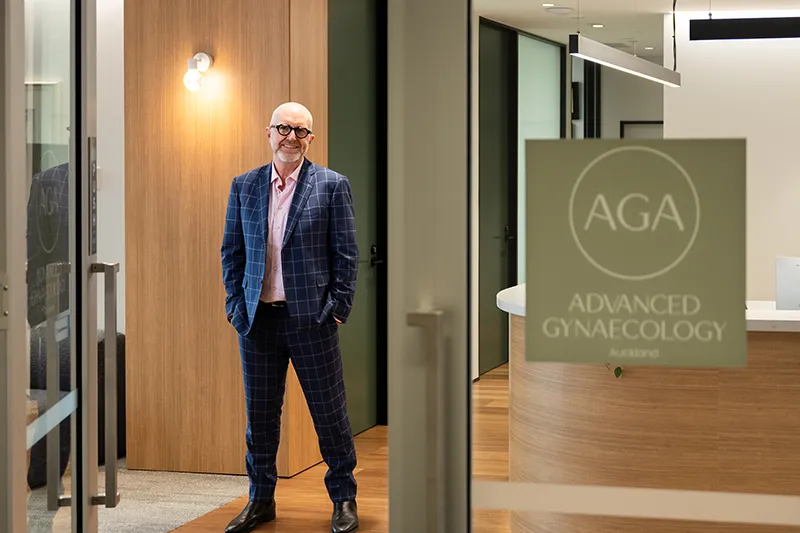
Though it’s thought around 1 in 10 women suffer from endometriosis, diagnosis remains tricky; it takes an average of 8 years to be diagnosed.
Part of the challenge, says Michael, is that endometriosis can present very differently from one person to the next. Some women have extensive disease but relatively mild symptoms, while others experience debilitating pain despite limited visible endometriosis. Others have no symptoms at all.
While awareness and research funding are improving, Michael says endometriosis has long suffered from what many experts describe as medical misogyny – the tendency for women’s symptoms and pain to be minimised, dismissed or under-researched.
Michael also believes part of the reason progress has been slow lies in the fact it’s not a life-threatening condition.
“It’s not cancer, so that puts it a rung down in importance [in medicine],” he explains. “But there’s so much research showing that the effects of endometriosis and endometriosis pain are just as bad as having cancer.”
But as understanding of endometriosis has evolved, so too has recognition that its effects extend far beyond painful periods. Fatigue, migraines and brain fog are increasingly recognised as part of the condition, reflecting its links to chronic inflammation and persistent pain. Research has also associated endometriosis with an increased risk of cardiovascular and metabolic disease later in life.
Michael believes one reason the condition has proved so difficult to understand is that endometriosis may not be a single disease at all. Instead, it may encompass several distinct disease processes that present in different ways and affect different parts of the body.
Most cases involve tissue growing within the pelvis, but endometriosis can also affect organs such as the bowel and urinary tract. In rarer cases, it has been found higher in the abdomen and even close to the heart, highlighting just how far-reaching the disease can be.
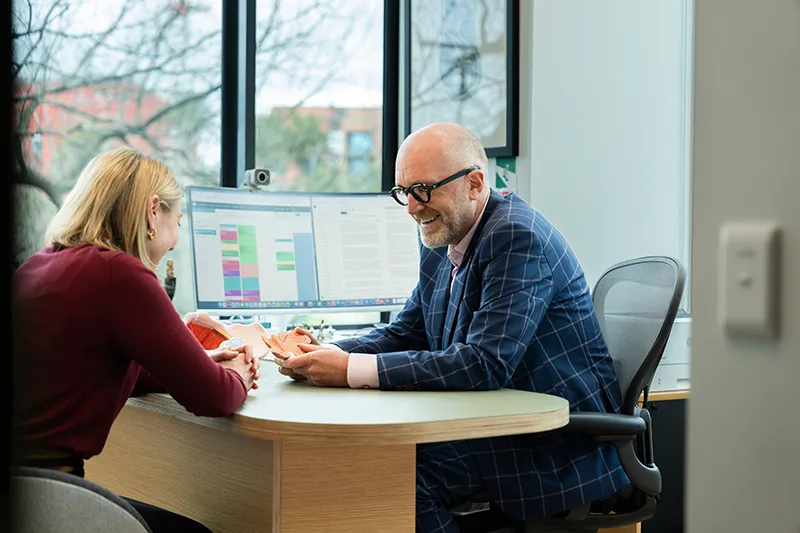
There has been more exploration of the causes of endometriosis in recent years, leading to some interesting discoveries and theories. Michael explains: “In terms of what causes endometriosis, it’s got something to do with the immune system, but it’s not an autoimmune disease. We think it has something to do with stem cells, and then genetics as well; not just genetics, but epigenetics – the effect of the environment on your genes.”
Another area of scientific exploration is the microbiome, the idea that changes in gut and reproductive tract microbes are linked to how endometriosis develops, persists and causes symptoms. Research is ongoing.
Advances in diagnosis are also offering fresh hope. While laparoscopy was once the primary way to diagnose endometriosis, transvaginal ultrasound is now the preferred method. However, the condition can still be missed if scans are not performed and interpreted by practitioners with specialist expertise.
Looking ahead, Michael is optimistic about the development of biomarkers – detectable signals in blood, saliva or urine that could help identify endometriosis without the need for invasive procedures. He is involved in biomarker trials and believes they could become available within the next 3 years.
On the treatment front, global guidelines – including those from the Royal Australian and New Zealand College of Obstetricians and Gynaecologists – increasingly steer towards exploration of other methods of treatment, rather than surgery alone. New hormonal treatments are also an important step forward.
“Surgery is good, and surgery can be life changing,” says Michael. “But doing multiple operations is often of no benefit. We can do surgery and it doesn’t make a difference to the pain, or it might even make the pain worse.”
Because of the multifactorial nature of endometriosis, he says treatment should involve multidisciplinary care. That might include pelvic physiotherapy, pain psychology, targeted hormonal treatment and other pain management.
Michael and his Endometriosis NZ colleagues are advocating strongly for women. He points to the great blueprint in Australia, where a National Action Plan on Endometriosis (NAPE) is making multidisciplinary care more accessible and including education. Part of this is the PPEP Talk (Periods, Pain and Endometriosis Programme), a highly successful schools-based initiative teaching kids about pelvic and period pain and endometriosis. “They’re educating hundreds of children around Australia, boys and girls, about periods and pain, what’s normal and what’s not. It’s so important,” says Michael.
Endometriosis NZ also recently applied for funding for 2 new medications from Pharmac: Visanne and Ryeqo.
In the meantime, Michael offers advice to GPs, who are often the first professionals women see with pain. “Listen to your patients. The key thing is to recognise that if they’re coming to see you repeatedly for period pain, there is an issue.”
And his advice for women? “Trust yourself. Don’t gaslight yourself, which is typically what people do on top of being gaslit by the system. Trust yourself and if you’re not happy, get a second opinion.”
Adele suffered excruciating periods for much of her adult life, yet it wasn’t until she struggled to get pregnant at 29 that she got an endometriosis diagnosis. She went through several surgeries to remove the disease and went on to have 3 children.
“I battled through extremely painful periods when they came back after each pregnancy,” she recalls, adding that the contraceptive pill had dulled her symptoms. “But I just thought, ‘This is the price I’m willing to pay to have the family I want.’”
Adele “soldiered through” until her early 40s, when she had a hysterectomy. It was during the procedure that adenomyosis was discovered, a related condition where endometrial-like tissue grows into the uterine muscle wall. Evidence now suggests around 70% of people with endometriosis also have adenomyosis.
“Since the hysterectomy, it’s been amazing,” Adele says. “I’ve had no pain. My life has turned such a corner.” Still, she admits, the removal of an organ is a drastic way to get relief.
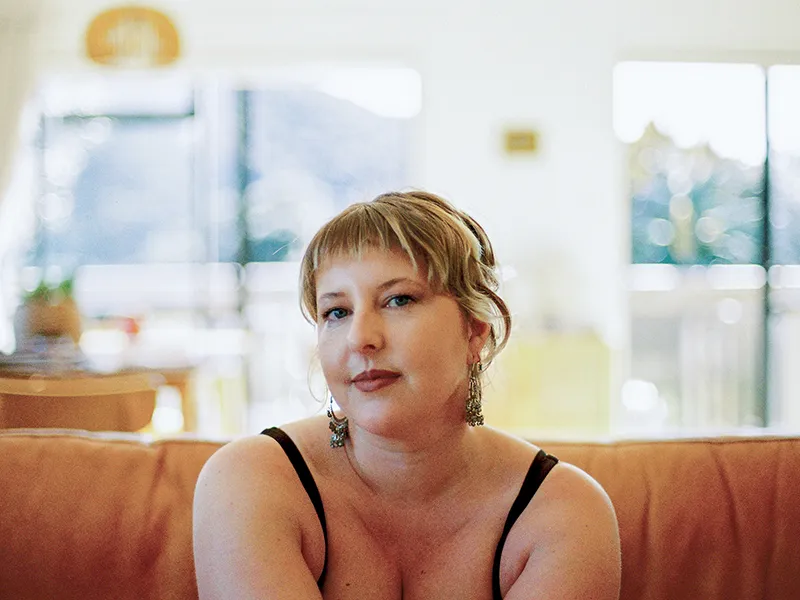
Ainsley has spent most of her life battling debilitating endometriosis pain. She’d always thought that because her mother suffered similar pain, her excruciating teenage periods were “just part of the deal of being a woman”.
Her other symptoms – severe abdominal pain and gut issues – were not recognised as related, even by her. Visits to doctors about her pain were unhelpful, and hospital admissions were inconclusive. Over the years, she was told by different doctors that her pain wasn’t enough to prove endometriosis, and that she was seeking a diagnosis because endometriosis was “trendy”.
“One of [the doctors] told me it was just ‘learned’ pelvic pain, which didn’t explain why my periods were so painful in the first place. I thought, ‘This doesn’t make any sense.’”
She remembers times when she didn’t want to be around anymore. “I was lying in bed wishing not to wake up, basically. I was just so sick of being in pain all the time.”
Ainsley had surgery, which was effective for a few months until a bout of Covid-19 sent her spiralling into more pain, severe depression and fatigue. Now, she’s using a hormonal progesterone treatment, which has made a huge difference to her life. “I’ve slowly been getting my energy back. I’m getting my life back now.”
Determined to use her experience to advocate for others, she launched Now You See Me, an empowerment project featuring stories and photos of women from all over New Zealand who have been on endometriosis journeys. A free exhibition of her work is running from 8–13 September at Thistle Hall Community Gallery in Wellington.
Ainsley is philosophical about her own situation, echoing the experience of many women. “I feel very grateful to be where I am at the moment, but also very aware that this is not going to last forever. So I’m just trying to make the most of it while I can function.”
Dr Tom Cawood shares how he developed a science-backed nail strengthening formula to keep fingernails in top-notch condition.

Philanthropic organisations have enormous potential to make a difference if they have a clear purpose and a sound strategy. MAS has turned to one of New Zealand's leading philanthropic consultants to get the MAS Foundation off to the best start.
Meet MAS Here for Good Scholarship recipient, Aiyaan Abzal, who tells us all about The Sunday Clinic, where he volunteers.