8 ways engaging with art can boost your wellbeing
By MAS Team
By MAS Team
Engaging with art, whether creating it yourself or enjoying works made by others, is a simple but profoundly important human act. It can reduce feelings of stress and anxiety, put you into a meditative flow, provide a pathway for processing complex emotions and have a considerable effect on physical health and wellbeing. So here’s how to expand your world through art and creativity.
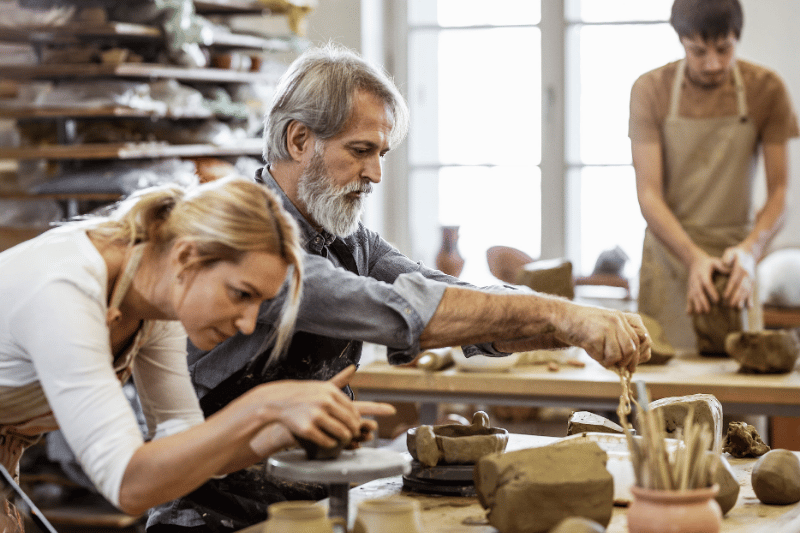
In her new book ‘Art Cure’, Professor Daisy Fancourt shares the cutting-edge scientific evidence for how the arts affect our minds, brains, bodies and behaviour. It looks at the whole spectrum of health, from how our day-to-day engagement in the arts influences our wellbeing, to how people can use the arts to support specific mental and physical health outcomes. It blends science with real-life stories and provides a ‘daily dose’ at the end of each chapter showing how to apply the science to your own life to optimise your health.
Once you’ve realised the positive contribution art can make to your wellbeing, you’ll want to get started right away. Daisy suggests an easy entry point is to put aside 10–20 minutes a day for artistic pursuits. But don’t feel daunted: it doesn’t need to be a major undertaking. Could you dedicate some time to doodling in a notebook? Or maybe grab some knitting needles and start a simple project? Singing in the shower, dancing in your kitchen, taking photos of your favourite people, sketching what you see in the garden… these all count! We know we need to make time for daily exercise, so why not do the same for the arts?
Waiting for the muse to strike? You could give it a nudge by taking a turn around your nearest gallery, poring over a beautiful art or picture book, or hopping online and doing a virtual tour of a famous institution like the Louvre in Paris, the British Museum or New York’s Guggenheim. This could prove to be just the kick-start you need, as studies have shown that engaging with artwork which affects you or moves you in some way can prime you for your own state of creative inspiration. Once you know what you like, follow artists and makers on social media to stay connected to their work.
If you’re a social creature by nature, then joining a local art group, creative writing circle or craft collective might help you stay engaged with your project. Creativity thrives in community, and the connections you make through a shared interest can be really rewarding in their own right. If an in-person group isn’t doable, you can find virtual communities via platforms like Facebook or Reddit. There are also amazing online courses through programmes like MasterClass, where you can learn everything from film-making to spray painting in lessons delivered by world-renowned experts.
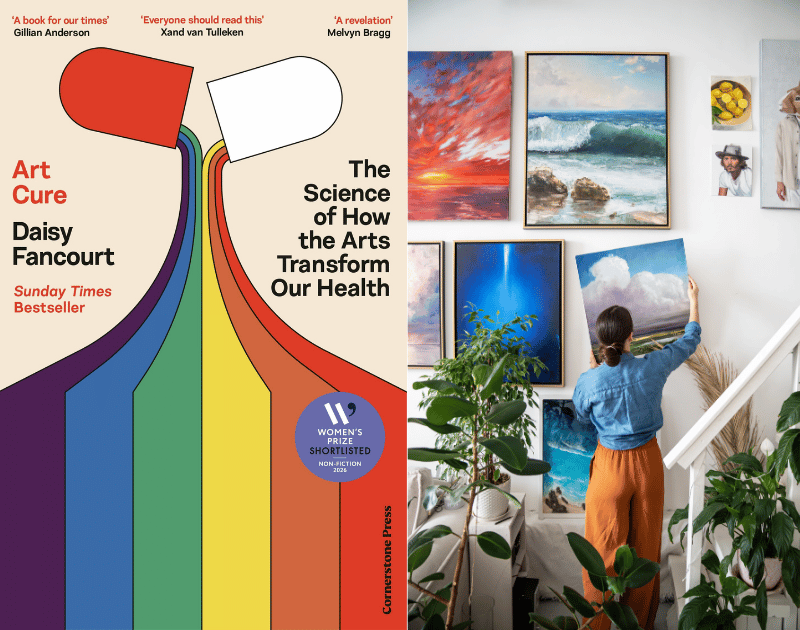
Maybe you’d like to add more art to your walls, but the world of collecting feels a little confusing… and expensive. In fact, there are many ways to fill your home with art that don’t cost the earth. You could visit student shows and support talented young artists as they’re just emerging, look around in charity shops or check out estate sales and auctions to find something you love. Online marketplaces like Etsy sell creations by artists from all over the globe.
If you’re buying a significant piece with a higher price tag, there are a few practices you should undertake to make sure you’re paying the right price for an authentic work. Do some research about the artist to see if they have an existing body of work, an exhibition history and any information about what previous works have sold for. Factors like the size of the artwork, the complexity, how well established the artist is and the scarcity of their work will all affect the cost. When buying from a gallery, request a certificate of authenticity (COA) so you have documentation to store in your files.
Once you begin collecting or creating art, it’s worth thinking about how to preserve and protect it. Works on paper and canvas are sensitive to light, humidity and temperature, so hanging pieces away from direct sunlight and in stable environments will help prevent fading and deterioration. Where possible, opt for UV-protective glass when framing, and store any unframed works flat in acid-free sleeves or folders.
As well as keeping it safe yourself, it’s also important to have peace of mind that your art is appropriately insured if something goes wrong. MAS Contents Insurance provides cover for works of art (including paintings, sculptures, ornaments and antiques) up to $25,000 for any one item. If you have higher-value pieces, these will need to be listed as ‘specified items’ on your policy schedule. The policy also includes a ‘pairs and sets’ clause, which means if one part of a set is irreparably damaged or lost, MAS will settle your claim as if the entire pair or set was involved in the loss. Terms and conditions apply.
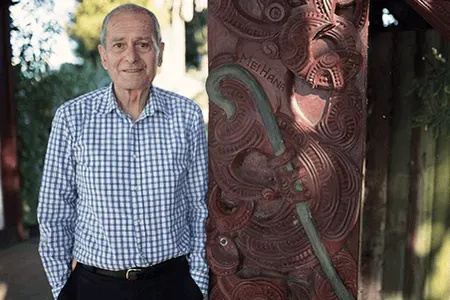
The concept of Te Whare Tapa Whā is about maintaining not just physical and mental health but also social and spiritual connections in order to promote good health.
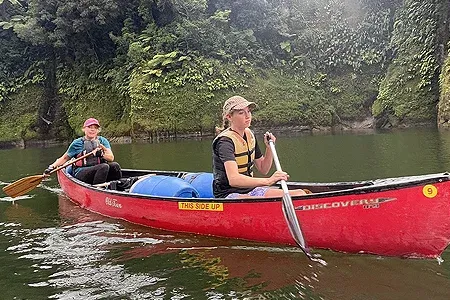
Paddling their way down Whanganui River provided MAS Member Nicky Dewe’s family with stunning scenery, sore shoulders and some life lessons learned along the way.
MAS Member Elisabeth Easther looks at the mental and physical effects of limiting added sugar in your daily diet, and shares some healthy alternatives.