Psilocybin: The psychedelic new treatment for depression
By MAS Team
Last updated 17 July 2026
After decades of work and research in the mental health field, MAS Member and psychiatrist Dr Cameron Lacey is now the first, and currently only, provider of a groundbreaking treatment for depression in New Zealand.
According to Ministry of Health figures, an estimated 600,000 adults in New Zealand experience depression and anxiety every year. Based on those numbers, there won’t be many Kiwis who haven’t been affected by the black dog, whether enduring the storm themselves or seeing it steal joy from the lives of loved ones. Depression and anxiety not only take a huge personal toll, but have a high social and economic impact on our nation as well.
While there are, thankfully, a variety of treatment types available, there are still some 30% of people who find no significant or lasting relief from the options they’ve tried.
Last year, however, New Zealand became one of just a handful of countries to allow a promising new approach. This novel treatment includes the patient being given a precise dose of psilocybin, as part of a broader therapy package. Psilocybin is the medical name for the hallucinogen that comes from what are commonly known as ‘magic mushrooms’.
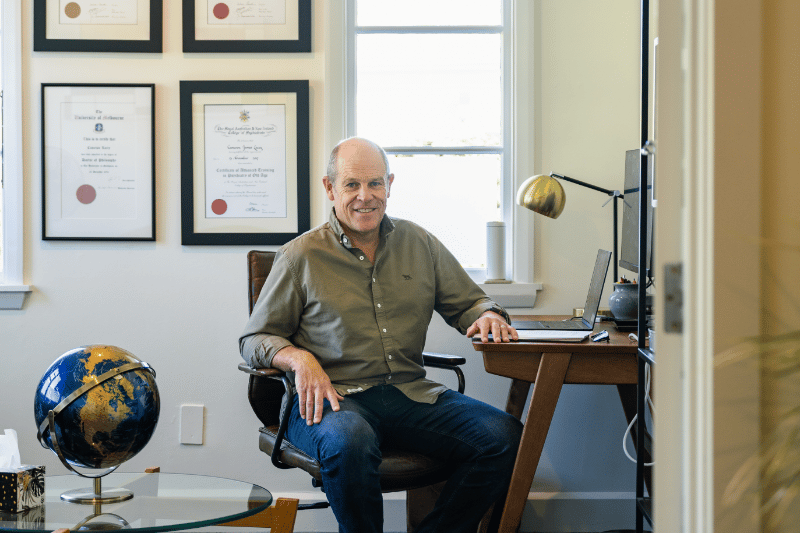
The first, and currently only, doctor permitted to administer psilocybin-assisted therapy in Aotearoa New Zealand is psychiatrist and MAS Member Dr Cameron Lacey (Te Ātiawa). Based at Elimbias Health in Christchurch, Cameron’s career in mental health spans several decades across Australia and New Zealand, working directly with patients, in medical leadership and in academia, where he is now an Adjunct Professor at the University of Canterbury.
Over the years, and particularly through the research part of his role, Cameron has been committed to finding new ways to help people recover from depression. “I was involved with a group that was trialling different combinations of psychotherapies, cognitive training and medications for people with mood disorders, and so we were always looking to see what else could be added in to enhance outcomes,” he says.
 His interest was piqued when he began to see international research showing positive responses to psychedelics for people who had been through many treatment types without lasting success. While the data itself was promising, there were still many question marks over whether it would be a viable option here.
“I became very interested in this and spent a number of years researching, writing and planning around that,” says Cameron. Next came a small feasibility study to see whether it would be possible to recruit patients and meet regulations and approvals.
Then in 2023, Australia made a landmark change to their legislation, allowing for medicines containing psychedelic substances, including psilocybin, to be prescribed by authorised psychiatrists for the treatment of certain mental health conditions. This set the scene for New Zealand to follow suit. Here, however, legislative change was not required – once regulations were defined and standards were met, Medsafe gave Cameron approval in June 2025.
To understand the treatment, you first need to understand the disease.
“You could think of depression as a person being almost imprisoned by negative thoughts and cognitions about themselves, and their connection to others and the world,” says Cameron. “But the experience of psilocybin allows them to see those aspects in very different ways, including what’s happened in their past, which then creates the possibility for change.”
Cameron is quick to clarify however that psilocybin alone is not a magic bullet. “Often people come in with hope that as soon as they’ve had the psilocybin, they’ll be free of depression. But we know that's not the case. It requires ongoing work in order to leverage the insights that occur during psilocybin to create meaningful changes.”
That ‘ongoing work’ involves both pre- and post-dosing therapy sessions that help patients not only work through their current challenges and perceptions, but also consider and make sense of them in relation to what they experienced under the influence of psilocybin.
The dosing day itself is a carefully run procedure where people are closely monitored and cared for by Cameron and his colleague, psychotherapist Professor Marie Crowe. People will arrive with whānau or a chosen support person, they run through the consent process, and then, “we talk about their expectations, set intentions for the day, and when they’re ready, they then receive typically one capsule,” explains Cameron.
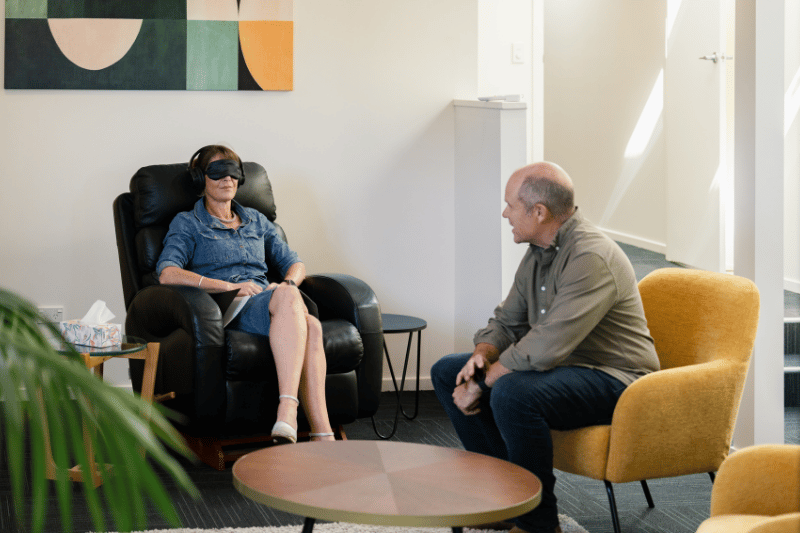
Marie and Cameron will then sit alongside the patient for the next 6-8 hours, as the perception-altering substance does its work. “Usually about 45 minutes after they’ve taken the capsule, they will begin to experience a change, or a sense that something may be different. At that stage, we encourage people to put on the eye mask and the noise cancelling headphones, and listen to a playlist that is designed to match the arc and trajectory of the psilocybin experience.”
While you might picture something more active, during this phase Cameron says people are largely introspective. “They can have a profoundly powerful internal experience but often appear quite comfortable, with little or few displays of distress or change.”
Marie and Cameron continue to observe and support the patient as required while avoiding intruding in any way, unless the patient is actively seeking reassurance or comfort.
“Typically after about 5 hours, people feel like they’re beginning to return to themselves, and the effects of the psilocybin are no longer apparent. And then we’ll spend 1 to 2 hours talking about what they experienced and how that may relate to their experience of depression, and what that could mean for their treatment and journey beyond depression.”
While every precaution is taken with the treatment, as with any medication, there are risks. “There’s a risk that you can have an unpleasant experience with overwhelming emotions, anxiety or distress which can contribute to a worsening of the mental state,” says Cameron. “But the most common side effects are nausea, anxiety and headache, often for the first 48 hours.”
For a very rare few, it’s possible that the effects of the hallucinogen will persist in the days or weeks after the dose – a condition aptly called Hallucinogen Perception Persisting Disorder – but studies put this likelihood at less than 2%.
At those odds, it makes it a very appealing option for those who are constantly battling with bleak thoughts and no clear relief from any other source. “Most people we see will have tried at least two, if not all the existing antidepressants. And most will have had some access to cognitive behavioural therapy or other talking therapies,” says Cameron.
Unfortunately, the treatment costs are still prohibitively high at approximately $20,000 per patient. “That’s largely through the very high administrative burden to get to this point, as well as the intensity of the clinical treatment – the number of therapy sessions, and the requirement for 2 clinicians for an 8-hour session.”
There’s also the cost of the psilocybin itself, which is currently imported from overseas in order to meet the quality control requirements – a process which is not yet possible here at home.
Cameron intends to keep pushing for psilocybin to become available on the public health system so that it can be accessed equitably, rather than being limited to those who can afford it. “Otherwise, we risk exacerbating our current mental inequities,” he says.
Since becoming authorised to use this treatment last year, Cameron has been inundated with interest from potential patients, as well as world media watching on with interest. Meanwhile, he’s focused on continuing his crusade to help improve wellbeing, one person at a time.
While it’s still early days, with 20 patients now at various stages of the treatment protocol, he’s optimistic for what’s to come. “Unfortunately, it’s not a fix for all, but the majority of patients have experienced a significant improvement over the course of the treatment.”
And for those who haven’t or who aren’t able to access this treatment, Cameron still wants to impart a clear message of hope.
“There always remains a whole variety of other treatments and approaches that people haven’t tried. So, even if we aren't able to accept and help everyone because of current eligibility, there are other options they may benefit from. I want people to retain hope and keep persisting.”
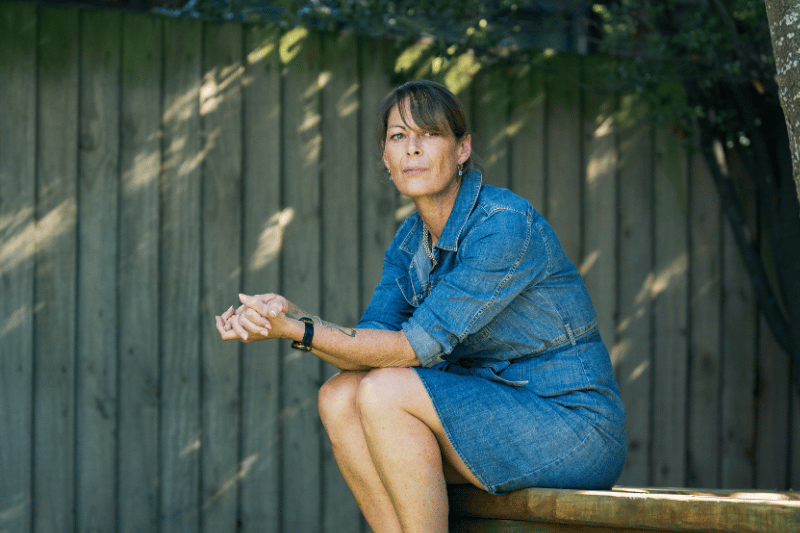
“I’ve had depression most of my life and have been on lots of different antidepressants since I was about 18. It can be so crippling. Sometimes the only thing keeping you alive is your heart beat and your breathing. You can’t show up for anything.
“Prior to seeing Cameron, I knew something had to change. We went through therapy and trialling medications for a year and a half, and then he told me about psilocybin. I had absolutely no idea what it was until he put it in layman’s terms as ‘magic mushrooms’. Even then I didn’t know much.
“I couldn’t sleep the night before the dosing. When I got to the clinic I said, ‘I’m really worried I’m going to sleep through the whole thing.’ Cameron chuckled and said, ‘You won’t.’
“It was a very normal capsule; it just looked like your average multivitamin. Within half an hour, I noticed the floor wasn’t where it ought to be. Then I put the eye mask and headphones on and away I went. I knew where I was and that Cameron and Marie were there, but all of my thoughts were very introspective.
“During the trip, I saw the beginning of my life through to now. At the start, I was in a green forest with dappled sunlight and I could hear children giggling and squealing. There was a lot of delight, but from there it got very sad. I thought I would experience some euphoria, but for me it was mostly sadness and then anger.
“Since then it hasn’t been a pretty process but slowly I have emerged. The psychotherapy before and after is a huge part of the treatment and dosing day is just one small piece that opens your mind. Then you’ve got to do all the work and make sense of what you’ve experienced.
“It’s helped me put into words things that I’d always felt but hadn’t necessarily been able to express. It’s had a ripple effect on my family too. I’ve been able to be more present, not just going through the motions. For most of my life I’ve felt like I’ve been hovering and watching myself like a movie. Nothing felt real. Now I feel things a lot.”

Meet MAS Here for Good Scholarship recipient, Olivia Gray, who details her volunteer activity and the reward of giving the gift of time.
From law and rural medicine to award-winning Waiheke vineyard and restaurant Casita Miro, Barnett Bond and Cat Vosper grew their dream life from the ground up.
C.R.A.V.E. was awarded the MAS Here for Good Scholarship Group Award. Chairperson John McCormack details the LGBTQI+ volunteering that led him to co-found this exciting new kaupapa!