Artist Sam Gilmour’s brush with success
By MAS Team
For artist, teacher and MAS Member Sam Gilmour, painting is a way to bring her childhood dreams to life in vivid colour. She tells Nicky Dewe about embracing the messiness of the creative process and nurturing the next generation.
Glistening piles of rainbow-coloured pipi and cockle shells, crashing waves and waterfalls, a dream house nestled in lush native bush… These are some of the scenes and subjects brought to life in the paintings of MAS Member and artist Sam Gilmour. For Sam, her lifelong creative expression has provided more than a compelling pursuit – it’s been a portal to another world too.
“I’ve always loved the ocean and as a child I was obsessed with mermaids. Now as an adult, painting has become a way to live out my childhood fantasies. I always paint places I want to be or things I want to look at. My paintings have become a window into the things that bring me joy.”
Sam is not only a professional painter in her own right – appearing in the MAS Emerging Artist’s Gallery at Art in the Park this year and last – but is also helping another generation of Kiwi creatives to grow and flourish in their artistic pursuits. As an art teacher at Auckland’s Aorere College, it’s a subject she believes is becoming more valuable and important as the world and technology evolves.
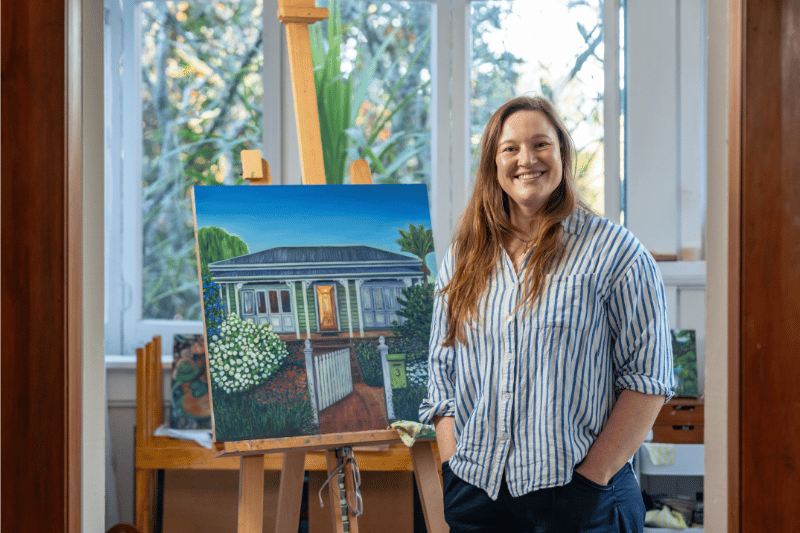
“A lot of the students I teach are real perfectionists, and nothing gets in the way of creativity more than wanting to be perfect,” says Sam. “I tell them, ‘I want to see the mess. I want to see the scrappy stuff because that’s how your brain works things out.’ There’s a big focus on literacy and numeracy these days and of course they are really important, but sometimes the non-core subjects take a hit as a result. Art involves real problem-solving too.
“Some of these kids come into class and you can see they’ve never had that tactile experience. They’re nervous to give it a go because they don’t want to be bad at it. I try to teach them that it’s not about instant gratification, that there’s value in chipping away at a project and building skill and seeing your progression. That’s completely new thinking for some students.”
She’s not surprised, however, when parents seem concerned if their children want to pursue it as a career, given how hard it can be from a financial standpoint.
“When I have parent-teacher interviews and there’s a student who is more into the arts than into academia, the parents are sometimes worried. I do think you have to be more dogged, or you might have to have your fingers in many pies. Potentially you might have to create while you have your day job too. But it’s worth it.”
And while the viability of a career in the arts may feel even more precarious in current times with new technology posing a threat to creativity, Sam sees it differently. “I’ve had people say things like, ‘Oh, I’m sorry, your purpose is gone now that AI can just whip up an image.’ And yes, it can, but there’s no humanity to it and there’s no craft. I do see value in using AI to give me more time for creativity. In terms of teaching, it’s helped remove lots of admin from my life, but I don’t see it as a replacement for creativity. I don’t worry about it as a painter.”
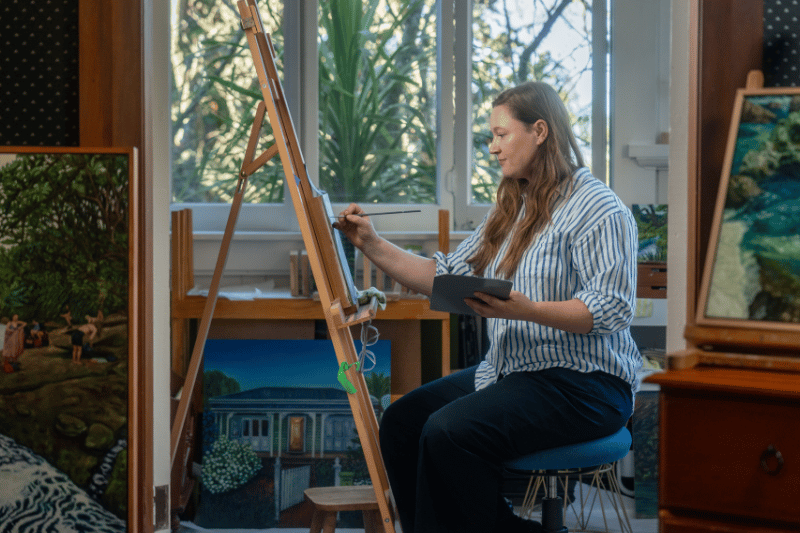
Sam’s own talent was nurtured at home from an early age by her parents, both MAS Members and physiotherapists, who encouraged and supported her passion through the years. She’s since had the support of The King’s Trust Aotearoa New Zealand, which helps young creatives turn their talents into viable careers through workshops, mentoring and grants. Then there’s the opportunity to exhibit at Art in the Park, thanks to sponsorship from MAS.
“When organisations like The King’s Trust and MAS come on board, it’s like they’re saying, ‘Art is really important,’ and that means so much,” Sam says. “Having your own stand at Art in the Park means you get to watch people interact with the things that you do. You do feel vulnerable exposing your inner thoughts and dreams and seeing if people appreciate it. But when they stop and really take it in, or when they look up close, as if they’ve found some thread that they really like, it’s an amazing experience.”
Whatever comes next for Sam, she knows she’s on the right path for career satisfaction and personal fulfilment. “I think what we see and visualise every day has an effect on us, and it should be valued for the ideas and perspective it brings. For me, I know I can’t stop doing it. During periods where I haven’t been making art, my life hasn’t been what I want it to be. I just have to learn how to make space and find the balance.”
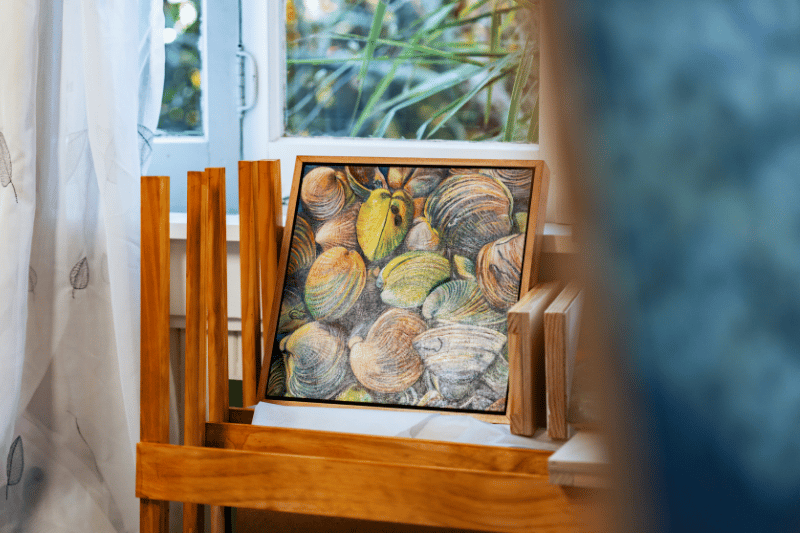
MAS is the Principal Partner of Art in the Park, at Eden Park, from 12-15 November. Art in the Park is New Zealand’s premier art show, transforming our national stadium into the country’s most unexpected art galleries. To find out more, visit artinthepark.co.nz.
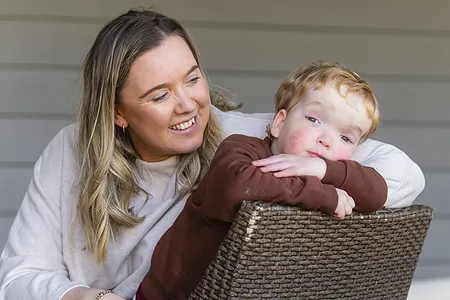
Through Visible Difference Aotearoa, Dr Emily Yassaie is helping to create connections and share knowledge to support Kiwis living with visible differences.
The MAS Foundation delivered its first round of funding in April, donating almost $350,000 to 10 not-for-profits focused on helping communities fight COVID-19. One recipient, a Facebook Messenger chatbot, helped ease pressure on the healthcare system.
Dr Savitha Bhagvan has seen many life-and-death moments during her 30-year career. The trauma surgeon talks human resilience, healthcare inequity and staying grounded amid the chaos.