The extra smile: Bring dental care to Taveuni
By MAS Team
From Kāpiti Coast to the classrooms of Fiji, MAS Member Gary Lawrence’s dedication to dentistry is obvious. He talks to Nicky Dewe about the challenges and rewards of providing dental care to isolated island communities.
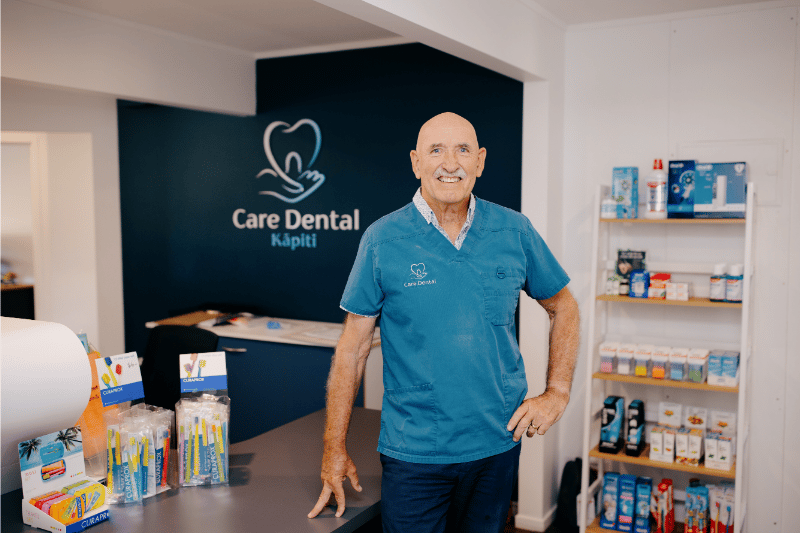
For the past 16 years, Kāpiti dentist and MAS Member Gary Lawrence has been making regular trips to the tropical paradise of Fiji. Not to lounge by a pool with a cocktail, but to provide critical dental care for local school children.
Taveuni, known as Fiji’s ‘Garden Island’, is almost 300km northeast of Nadi, and is connected daily by a short flight. It has approximately 20,000 residents, about 16 schools and a small Rotary Club that has sponsored many charitable projects to enhance its residents’ health and wellbeing.
One of these projects has been running since 2004, when Pukekohe dentist and Rotarian Johnston Luen started travelling to the island every 2 years with other dentists to provide dental care for local school children. Gary, who has run Care Dental in Paraparaumu with MAS Member Simon Wilson for 3 years, after 42 years in Raumati Beach, joined the group in 2010 and took over running the project in 2014 when Johnston retired.
The island has become a home away from home for Gary, who has continued travelling there every 2 years, except during an enforced 5-year hiatus over the Covid-19 period. The team, which now includes 3 other dentists from across New Zealand, work tirelessly over a 2-week stay to see as many patients as possible.
“We get to 6–9 schools over the 2 weeks, where we will see children from 8:30am until 3:30pm. Then after school until about 5:30pm or so, we see the teachers along with people from the village who have issues or problems,” Gary explains. “We typically travel there in August when temperatures are slightly cooler and easier to work in, although they’re still positively balmy for us Kiwis. The locals are wearing jerseys, and we all get around in jandals and shorts!”
The locations they work in are not typical for dentistry. “We work in classrooms, school libraries or on balconies. There’s no privacy as such, but technically we supply a high standard to the basic services we provide.”
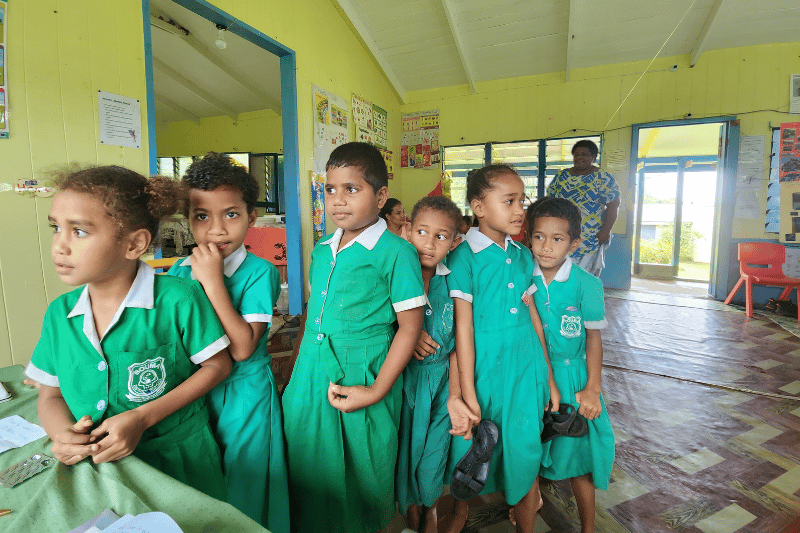
It’s not uncommon for curious eyes to peek through the windows as the sessions are taking place on school grounds. “After Covid, we had kids coming to us who had never seen dentists or had dental treatment before, so they were very inquisitive. The older kids knew us from previous visits.”
What the team can offer has evolved. “When I first started, we only had hot water sterilisers and we’d work by sitting on wooden benches and leaning over the children. Now we have collapsible manual dental chairs and mobile stools to work from behind the patients – less sore backs!” Gary says. “Most of the schools don’t have electricity, but we have now purchased 2 petrol-driven generators and a dental compressor. One of the generators feeds the compressor to drive all our air-driven portable dental units, which pack down and fit into a suitcase. These units basically function like those we have at home.”
While the equipment has improved and the team’s expertise both at running the trips and working in the environment has grown, other challenges have arisen to meet them. Gary says over the years he has witnessed first-hand how greater access to soft drinks and sweets has led directly to serious dental issues.
“The marketing for them has really ramped up since about 2014. Before that there was hardly any advertising around. Now you see signage and billboards at the village stores, with the multiple chillers inside packed with their products.”
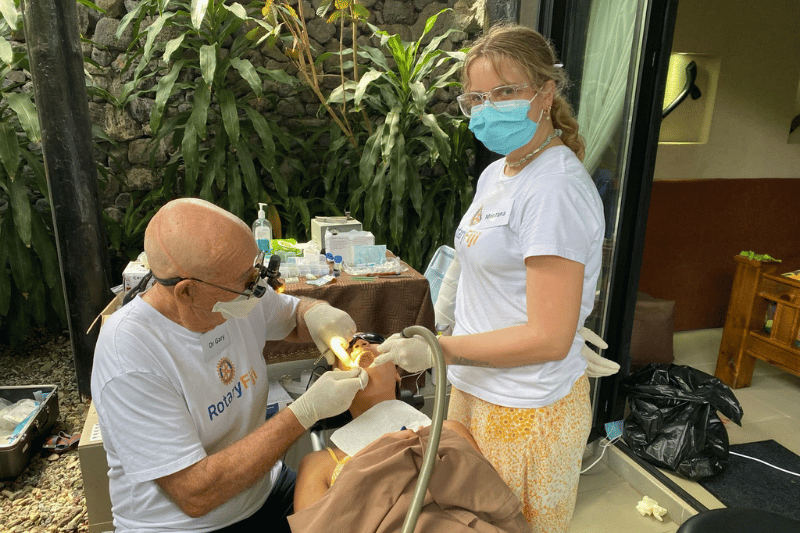
Coming back after the Covid break made this problem even more pronounced. “Previously we’d tried to go to a different school every day, but that all changed when we returned in 2023. We ended up having to spend 3 days at the first school and then it just carried on like that in each school. We have returned every year since 2023 attempting to catch up. On our last trip, we placed over 1,000 restorations but had to extract 47 permanent teeth from children under 14 years of age,” says Gary.
Clearly the need is great, and the team’s commitment is strong, although there are still many hurdles to jump through. Lots of paperwork and administration is required to even get the group off the ground, including temporary registration to work in Fiji issued by the Fiji Medical Council, dental indemnity insurance and Certificates of Good Standing (COGS) from the Dental Council of New Zealand. Then there’s travelling with 180kg of equipment and materials that must all be accounted for, valued and inspected at customs entering and exiting Fiji, and also re-entering through customs into New Zealand at the end of the trip.
The financing of the trips has come through many channels: fundraising from Rotary Clubs and Rotary Districts around New Zealand, charitable trusts, the New Zealand Dental Association (NZDA) and even private benefactors. Gary’s wife Diane helps manage many of the admin tasks, and in the past there has been huge support from Taveuni Rotary too, including hosting by Australian expat Rotarians Helene and Peter Brown. The couple, however, have recently returned to Australia for medical reasons, leaving the future of the dental missions uncertain.
While there is a dental hospital on the island, for many families it means taking time off work, paying for bus fares and potentially waiting hours to be seen. Unfortunately, the dentists there cannot provide treatment at the schools and by the time patients turn up with pain, all they can do is extract the offending tooth. “It’s an ambulance at the bottom of a cliff rather than a fence at the top, which is what we’re trying to do,” says Gary.
Being able to positively impact the wellbeing of Taveuni’s children means a lot to Gary, and his efforts have not gone unappreciated. At the 2025 NZDA Awards he received the Public Service Award. The Taveuni Rotary bestowed the team with Paul Harris Fellows (PHF), and Gary gained a double sapphire pin. His host Rotary of Kāpiti recently presented him with a ruby PHF for his work in the South Pacific.
Gary has also been honoured within the Taveuni community itself. “Last time I was there I met a 10-year-old whose first name was Gary. There aren’t many Fijians called Gary, so I must have impressed that family somewhere along the way!
We talked to experts on health equity in both the rainbow community and rural health to learn about the discrepancies in health outcomes.
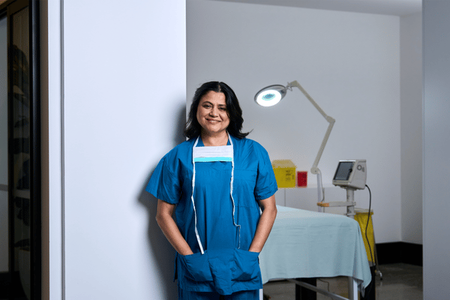
Dr Savitha Bhagvan has seen many life-and-death moments during her 30-year career. The trauma surgeon talks human resilience, healthcare inequity and staying grounded amid the chaos.
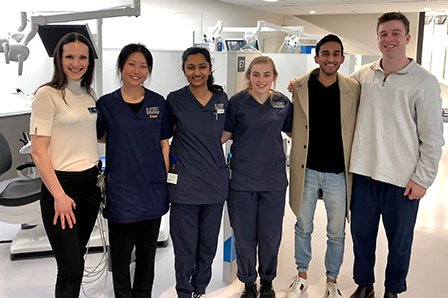
Meet MAS Here for Good Scholarship recipient, Aiyaan Abzal, who tells us all about The Sunday Clinic, where he volunteers.