Building community with Visible Difference Aotearoa
By MAS Team
For people living with visible differences, knowing they’re not alone can have a huge impact. That’s why MAS Member and craniofacial surgeon Emily Yassaie is helping to create community, share knowledge and support patients beyond the operating room.
As a craniofacial surgeon, MAS Member Emily Yassaie spends her days performing complex operations on patients who come through the hospital doors for many reasons. They may have had a tumour removed, suffered from facial palsy, experienced trauma to the face or body, or been born with a congenital condition such as a craniofacial cleft.
In a medical capacity, her role is to deliver the best possible treatment and care, but in many cases that’s only one part of what people require in order to move forward confidently with the life that follows.
“Throughout my training, my time working overseas and then coming back to New Zealand as a consultant, I realised there’s this gap between what the hospital can provide and what people actually need. We can look after the physical side, but there is often no public funding for the psychological support which provides that extra layer of care,” Emily explains.
“I’ve found that in many consultations I’ve had with parents of a new baby with a visible difference, the time is spent talking them through what life might bring, rather than the surgical stuff. And it’s similar for people who’ve had cancer or a trauma too. They’re seeking reassurance and advice.”
During her years working in the UK and Canada, Emily came across several charities working in this space, helping provide vital support beyond the treatment phase. “We didn’t have that here, so I decided we needed to create it,” Emily says.
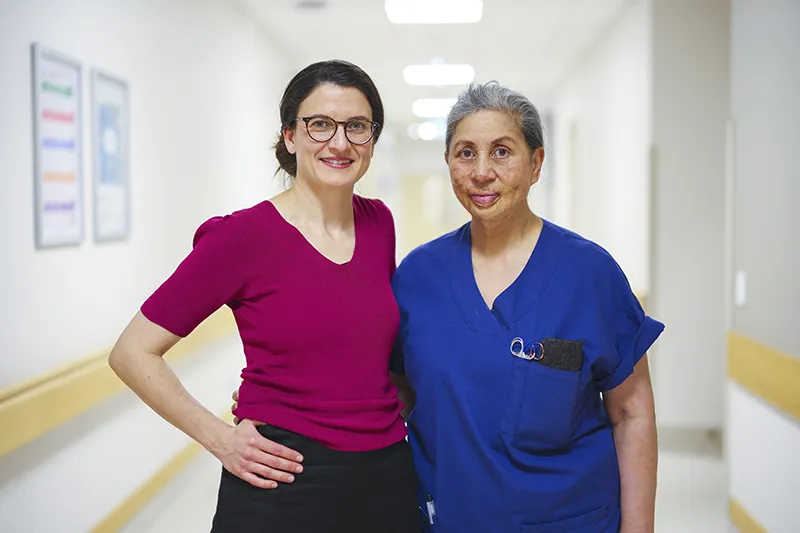
Visible Difference Aotearoa is a Wellington-based not-for-profit charity created by Emily, nurse and anaesthetic technician Mariann Betham, and consultant Pip Arnott. With support from MAS Foundation, Visible Difference was able to launch an online hub in 2025 to provide much-needed resources, guides and information which had been otherwise hard to find. Already they’re building a virtual community of people with shared experiences, and the next step is to begin connecting people in person.
“It can be really isolating to live with something that makes you different and that everybody can see. You can’t avoid it, and it just adds pressure on people when they’re being looked at. They might start to pull back from society, do fewer social activities,” Emily explains. “There’s lots of evidence showing that people who live with a visible difference have much higher rates of depression and anxiety. That’s why being able to bring together people who are experiencing these challenges day to day is massive.”
One of the reasons Emily believes this kind of organisation may have been missing from New Zealand could come down to our pragmatic approach to life. “People often don’t want to be seen to be upset about, or even aware of, their appearance. In our clinics at the hospital, we’ll hear them say, ‘Oh, I don’t want to be vain.’ But it’s not vanity. When you’re talking about differences to the face in particular, it has a big impact. Around 60% of our communication comes through our facial expressions, not our words, so it’s a huge thing.
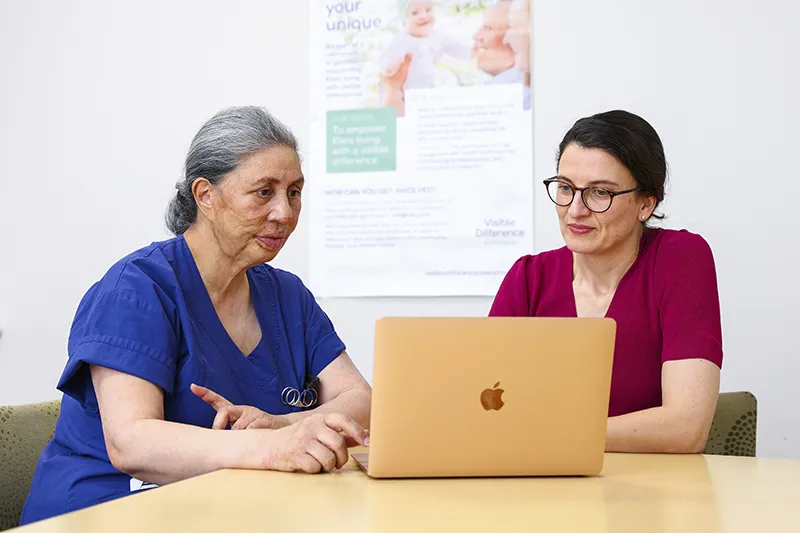
But it’s not just the people with the difference themselves who need this support. For new parents, it can be really hard. “They love that baby immensely and they want to do everything for them, but they’ve never navigated the system before and don’t know where to begin. Instead of having those parents spend hours in the middle of the night googling things, we’ve put that information in writing for them and we’ve had amazing feedback,” Emily says.
“Some parents have told us they’ve never felt so seen. It doesn’t necessarily change their journey, but it lets them know that people have been through this before, and these are normal feelings to go through.” Alongside the guide for new parents, there are also resources about how to support your child during surgery and starting school.
Then there are unique challenges for those who didn’t begin life with a visible difference but acquired it through an event or a condition like Bell’s Palsy. “Right now, we’re working on a resource about how people can deal with loss of identity and grief for their previous self. This will address things like how to handle questions about their appearance or people staring at them – things that have never been their ‘normal’,” explains Emily.
The list of goals the Visible Difference team hopes to achieve is long. They have plans to start school programmes in the future, and they also want to increase the amount of research happening in this area, so the field of knowledge can grow. In particular, Emily says there is very little information around the impact of visible differences on Māori and Pasifika communities.
For Emily, Visible Difference has become an important way to help resolve some of the challenges that she can’t fix through her day job alone, because the surgery is often only the start.
“The most important thing is for people to be able to live their lives, feel supported and have the confidence to contribute to their communities,” she says. “The more awareness we create about some of the conditions or issues that cause visible differences, the more the curiosity dies back and people can actually communicate properly with the person behind the difference. That’s what I’d really like to achieve in the bigger picture.”
“My burns happened when I was 3. I feel that I went on to work in medicine because when I was a kid I spent so much time in hospital. It was where I felt safe and people didn’t judge me. Some of the plastic surgeons who treated me when I was a child, I’ve now worked with as their charge nurse!
“Thanks to modern technology, things have moved on a lot in terms of treatment. These days we can often start the surgery right away, and send people home again as quickly as possible. But then there are no resources that tell them, ‘where to from here?’
“From my own experience, I know that the journey is not only for the person who has the difference, but also for their family. I’m lucky I’m from a big Samoan family of 13 and my mum was really my voice. But it would have been great when I was growing up to know that there were other kids and families who went through what we went through – that we were not alone in isolation.
“Following surgery, there is a further psychological shift for the individuals and families to navigate. This can be new to someone who has previously been judged by how they looked.
“The real key is education. There are so many different syndromes or accidental causes, so it’s about making people more aware of them. Also helping people understand that just because a person has a visible difference, it doesn’t mean that they’re intellectually different.
“I see a lot of mums and dads who are really fighting for their children. They want people to know that their child is like every other child, they just look a little bit different.
“People need people, and no one is an island. That’s why we’d love to have more resources and to get more people who have visible differences and their families involved. To make the wider community understand we all make a visible difference.”
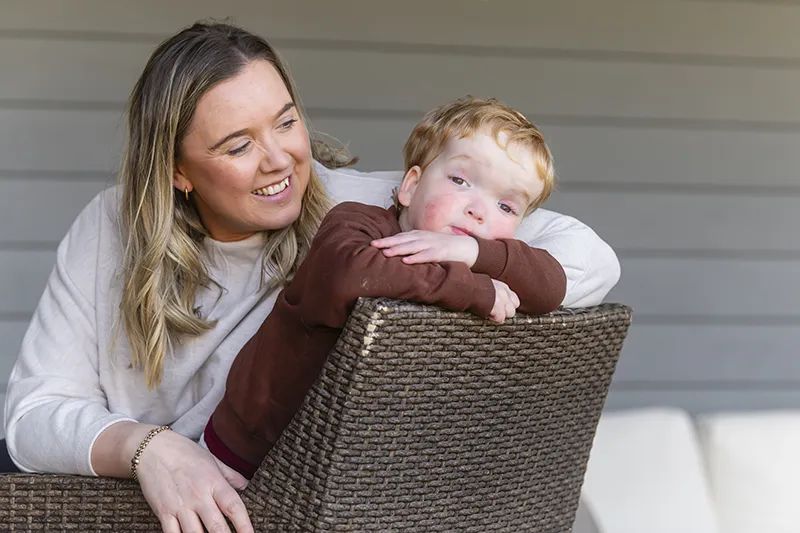
“My son Archie has an incredibly rare genetic mutation which has impacted his craniofacial bones. He was born with a small jaw and a different shaped skull, which means his eyes are wide set and he’s got little ear canals, but that’s the only area of his body that’s been impacted.
“In every way he’s a happy, healthy boy – always racing around, chatting and doing all the things 3-year-olds love to do. It’s just that he has a visible difference.
“We’ve experienced so many different questions from people. I don’t mind if they are curious and want to ask, but sometimes they will say things like, ‘What’s he got?’. My husband and I have had lots of conversations about how we explain it to people. ‘Visible difference’ is exactly the right way to put it.
“Archie has had several medical interventions, and we met Emily when he had a jaw reconstruction when he was 1. It was a massive deal for us and it was very overwhelming. I’d been searching for information on other children and parents who’d been through it too, but it’s such a rare mutation. I said to Emily, ‘There’s no Facebook group for this,’ and she said, ‘That’s exactly what we’re trying to build. A community of people who can support each other.’
“The resources they provide are so valuable. As a parent, you’d do anything for your child so you stay up all night searching and hoping for answers, even though you’re already exhausted. When Emily told me about Visible Difference in the clinic that day, it made me realise, ‘Wow, people do really care and want to help.’
“Because he’s 3 now and he’s meeting all his milestones, I’m in a much better space, but in the early days there were times of intense stress and worry for the future. Nobody could give us any answers.
“I think about the parents who might be about to go through the same thing as us and what a difference having those resources will make, from pregnancy and birth, to preparing for surgery and starting school. It’s all so helpful.”
Dr Julie Wharewera-Mika (Head of Foundation) says, “Visible Difference shows the power of lived experience, clinical expertise and community leadership coming together to fill a critical gap in support. Through our Community Koha, we’re helping ensure tamariki and whānau feel seen, connected and understood, creating the confidence, belonging and resilience that enables children and families to thrive.”
Mafi Funaki-Tahifote (Head of Foundation) adds, “We are grateful to the courageous work of Visible Difference Aotearoa to support those who are often unseen and underserved by the system and who experience inequitable health and wellbeing outcomes. By building a virtual community that connects people through shared lived experience, they embody our Foundation’s value of bringing and weaving people together to maximise collective impact.”
Meet psychiatrist Dr Cameron Lacey, the first, and currently only, New Zealand provider of the groundbreaking new psilocybin treatment for depression.
Whether it’s the compostable lid on the morning coffee or multinationals parading their commitment to charitable causes, the idea of doing business with a social conscience in mind seems everywhere right now.
University of Otago law student Clementine Rose recently received a MAS Here for Good Scholarship, which rewards students who actively volunteer.