Sort your priorities!

By MAS Team

Getting your priorities clear is essential to spending your time where it is most important and most valuable to you. Prioritising means that we pay attention to what is essential or important and put other things on hold. Understanding your priorities can be useful if you’ve been wondering where your time is going.
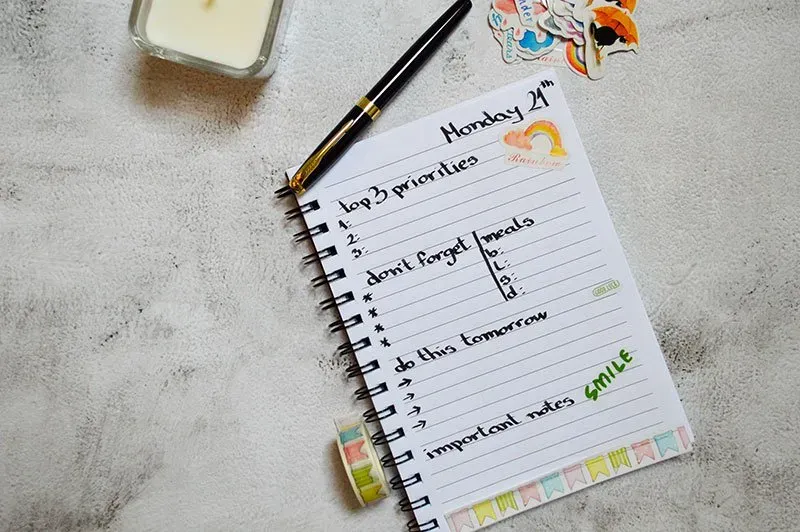

Opened diary showing daily plans

  • It can be useful to divide daily tasks and responsibilities into essential, important, and less important (or trivial). Setting your priorities like this might help if you’re preparing for an important presentation, preparing for an assignment, or trying to manage the demands of work and family.

  • Draw up a piece of paper into these three columns, and write everything down. Then start the day with tasks in the “essential” and “important” columns.

  • Only move on to the tasks in the “less important” category when you’re finished with all the tasks in the other two columns.

  • Or you can postpone the less important tasks in order to take a break to give yourself recovery time.

  • It can also be helpful to give a rough idea of time to each task – 5 minutes searching for the right image, 30 minutes for reading that article, 1 hour at your children’s football practice. Using this strategy, you can optimise your time. Only got 15 minutes before you have to head to an appointment? Which of your tasks are 15 minutes or less?
  • Share

You might also like
three female friends with with their arms around each others backs in support

Supporting others through pain and emotional stress

Emotional stress is felt throughout our body, it's not just limited to our over-worked mind. So what can you do to help someone who feels physical pain from an emotional event?

People in a busy cafe

Disconnect to reconnect

Learn about the benefits of real social connections and take the steps to digitally disconnect to help you reconnect.

Dr Angela Lim working in a hospital - listing

Hard talk: How to have difficult conversations

Having difficult conversations with friends, family or colleagues can be tough. Dr Angela Lim has some simple tips to help you tackle tricky topics with ease.