The wāhine making maternal mental health their mission
By MAS Team
Last updated 03 July 2026
Maternal mental health educators Jo Teina and Jasmine Davis are supporting Māori and Pasifika mothers who have faced perinatal distress, equipping them with cultural knowledge and professional skills so they can, in turn, support their own communities.
Pregnancy and new parenthood are often portrayed as a time of great happiness and fulfillment, but often the feelings are far more complex. For many, it can be a time marked by exhaustion, shame and a deep sense of isolation that is rarely spoken about openly. When a mother is struggling, the ripple effects are felt across her pēpi, her whānau and her wider community. Providing the right support and expertise at this time is critical and particularly for groups who are disproportionately affected.
In Aotearoa New Zealand, Māori and Pasifika communities experience higher rates of depression, anxiety and maternal suicide during pregnancy and the first year after childbirth than any other groups. Two inspirational wāhine who are striving to change these outcomes are Jo Teina and Jasmine Davis.
Jo (Ngāti Apakura, Ngāti Hinetu) has worked in maternal wellbeing for 40 years. She was one of the first Māori midwives to practice in South Auckland and developed a kaupapa Māori antenatal education programme, Wānanga Hapūtanga. She is also the kaumātua and Māori Educator at Perinatal Anxiety and Depression Aotearoa (PADA). Working alongside Jo is Jasmine (Faga – Samoa, Ngāti Porou), who is a youth practitioner with over 12 years’ experience leading rangatahi engagement programmes. Jasmine has also contributed significantly to national perinatal mental health resources and is PADA’s Pasifika Educator.
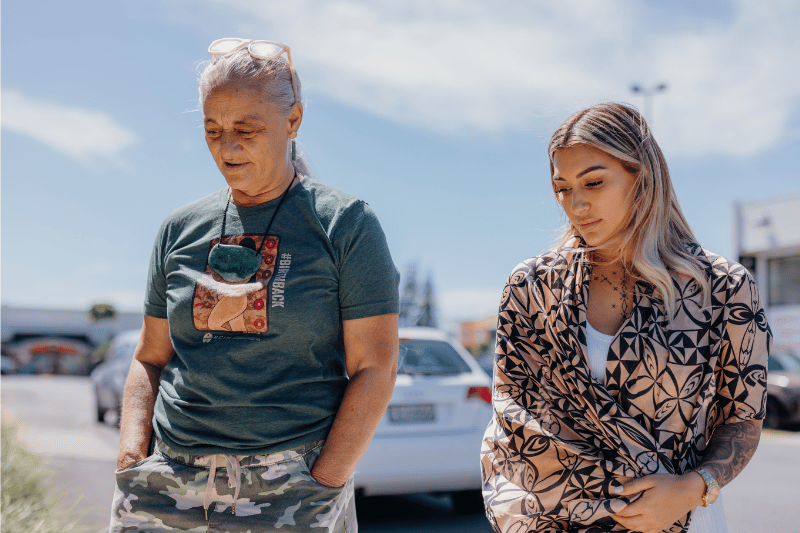
Together the two have been delivering cultural competency workshops, training those who work with new māmā – be it midwives, social workers or other healthcare professionals – to better serve their Māori and Pasifika clients, understanding culture, values and the systemic inequities they face.
While the work itself is demanding, one of the biggest handbrakes for Jo and Jasmine has been that there’s only 2 of them. They had a goal to grow the number of wāhine who could share this knowledge, expanding the reach and impact, and MAS Foundation stepped in to support. The Hine Ora Hine Tū programme was set up in 2024 to train more Māori and Pasifika women, particularly those who had overcome their own hardships, to become Peer Support Educators and leaders in their own communities.
“We cast the net wide and invited those who had a passion for perinatal mental health and lived experience of distress to come on the waka,” says Jo. “And rather than have it be, ‘This is a 6-week programme, and you’re going to learn to be this, this and this’, we actually co-created it with them.
“Initially we thought they would learn how to facilitate the programmes that Jas and I run, but in the end there was so much more to it. They gave birth to their own programmes and their own passions whilst healing from their own traumatic experiences.”
Jasmine, who ran fono (meetings) with a Pasifika lens, says, “We provided space for participants to talanoa [speak with openness] about their own experiences, and we shared tools, skills and cultural context. It was a village of māmā who had experienced perinatal mental health, some without realising it, and wanting to advocate for their own family and friends so they wouldn’t have to go through the same experiences.”
Feeling safe to open up was a big step, says Jasmine, particularly for this group. “Some of our Māori and Pacific māmā are cautious about engaging with services and being judged for not being a good enough mum if they admit they’re struggling. The fear of having their children taken away is real,” explains Jasmine. “We are also quite humble people, and we don't like asking for help, so that can mean that some of the early warning signs are missed.”

Through the programme, Jasmine says, “We would look at all of the different models of theory within the Māori and Pacific world. We’d look at and adapt the [maternal mental health] screening tools that are currently available, all while getting them to delve into their own language and their own story, and unpack that as well.”
For the Māori cohort, wānanga took place on the marae, which was important. “The disconnection to te ao Māori and not knowing mātauranga Māori around birthing is one of the underlying causes of perinatal distress,” says Jo. “Based on research, we knew that having opportunities to connect to culture makes a difference for whānau. I don’t think we really knew how transformative it was going to be for the wāhine themselves.
“We had some māmā who had some tertiary education, but there were some for whom this was brand new. They’d never had any Treaty education, so our Treaty workshops weren’t just a workshop, we actually went to Waitangi. They got to participate in marches, sit in forums and they really grew.”
Throughout the programme, as the wāhine were exposed to new experiences and knowledge, their confidence grew too. “Most of the women in both groups had never spoken in front of people before,” says Jo. “But, man, you see them now, and they run a whole session from start to finish. They share their own lived experience – sometimes crying, sometimes not – but every time making the whole room cry. The impact is next level. It shakes the room.”
Jasmine says, “I think this has been suicide prevention in its own right. By coming on the programme, these mums get that cultural grounding, education and a sense of community. They get to be around other people who understand what they’ve been through. But it also helps them in a professional sense; it creates opportunities for them to find work.”
An evaluation report of Hine Ora Hine Tū, conducted by Katoa Ltd, found that the programme “created measurable change in perinatal wellbeing, workforce confidence and system-level practice.” It said that, “by centring indigenous knowledge, lived experience and collective wellbeing, Hine Ora Hine Tū is building pathways for equity and planting seeds of enduring, intergenerational transformation for whānau and communities across Aotearoa.”
The pair are now hoping the mission will continue so that more women will get the right support, and the stigma around this prevalent issue will be reduced.
“MAS Foundation helped us take a dream to reality,” says Jo. “For me, this is my destiny and my calling. I want to see change in my lifetime so that suicide is no longer the leading cause of maternal death. I want this to be a safe place to grow and have a baby.”
Dr Julie Wharewera-Mika (Head of Foundation) says, “Lived experience is not a weakness to overcome, it is the wisdom that systems have too often ignored. When wāhine are trusted to lead from their own stories in community-led spaces, healing becomes collective and deeply transformative. This kaupapa shows that when we centre indigenous knowledge, lived experience and community-led solutions, we don’t just support māmā through distress, we reshape the system to be more culturally grounded, more compassionate and truly responsive to whānau.”
Mafi Funaki-Tahifote (Head of Foundation) adds, “We’ve had the privilege of working and learning alongside Jasmine and Jo, empowering them as they developed the Hine Ora Hine Tū programme. Like MAS Foundation, they embody the Samoan proverb ‘E fofō e le alamea le alamea’, honouring the belief that communities hold the wisdom and solutions to their own challenges.”
MAS Members are a generous bunch with many stepping in to help their neighbours, communities and and the country in the fight against COVID-19. Bulls flying doctor Dave Baldwin is one who put up his hand to help the effort.
Dr Tom Cawood shares how he developed a science-backed nail strengthening formula to keep fingernails in top-notch condition.
Following in her late mother’s footsteps, Elizabeth Emere Harte and Tūpuna Parenting are helping whānau to reclaim ancestral Māori practices in the digital age.