Breakdowns never happen at a convenient time. Whether you’re heading home after a night shift or running between a clinic and a school pickup, a car that suddenly stops cooperating is the last thing you need. The good news is that knowing what to do before it happens makes a stressful situation a whole lot more manageable.
From 1 April 2026, MAS Motor Vehicle policyholders with an eligible vehicle insured under full comprehensive cover will automatically have MAS Roadside Assistance (provided by AA Roadservice) built straight into their policy. It’s at no extra cost, with nothing to sign up for. Whether it’s a flat battery or a tow to the nearest repairer, help is easily accessible. Here’s what to do when things go wrong on the road.
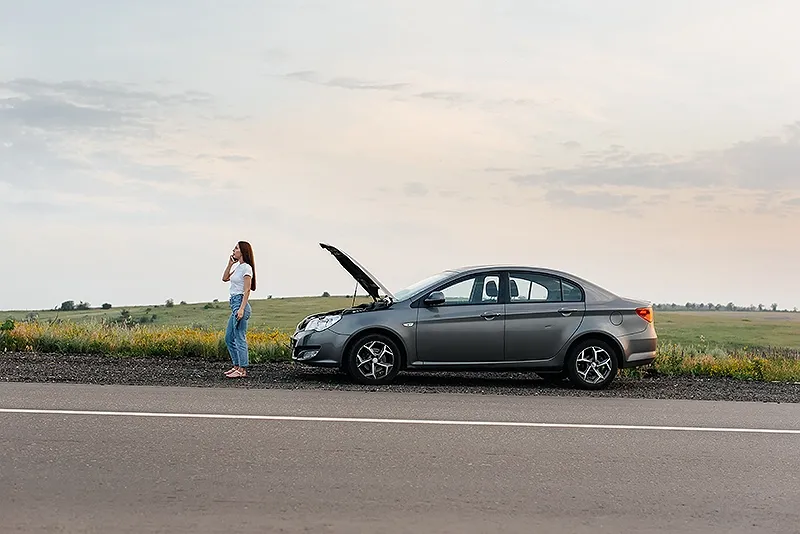
Stay safe and assess the situation
When something goes wrong, your brain can go blank. That’s completely normal, especially if you’re tired after a long day or the weather is bad. Here’s exactly what to do:
- Signal and pull over as far to the left as possible, away from traffic.
- Apply the handbrake, turn on your hazard lights and turn off the engine. You can also open your bonnet and boot to signal you need help.
- If it’s safe to exit the vehicle, only do so from the passenger side – away from traffic. Do not stand on the driver’s side. If it’s dark or raining with poor visibility, stay inside your vehicle with your seatbelt on. It’s the safest place to wait for help.
- Assess the situation. Can you see an obvious cause (e.g. a flat tyre) and is it something you can fix safely and easily? If so, the relevant steps are covered in the section below. If you’re unsure or not confident, skip straight to calling for help.
- Call for roadside assistance. If you have vehicle insurance with MAS, you can call our Roadservice provided by the AA on 0800 800 627 and select option 2. Have your vehicle registration number ready.
Common breakdown situations
Not all breakdowns look the same. Here’s how to handle the most common ones and when to simply call for help instead of trying to fix it yourself.
How to jump-start a car with a flat battery
A flat battery is one of the most common breakdown causes. If you turn the key and nothing happens, or the engine cranks slowly and gives up, you’re likely dealing with a battery issue.
If you have jumper cables and a second vehicle available, here’s how to jump-start safely:
- Park the working car nose-to-nose or side-by-side with yours, close enough for the cables to reach. Make sure both cars are turned off.
- Connect the red (positive) cable to the positive terminal on your flat battery, then to the positive terminal on the working battery.
- Connect the black (negative) cable to the negative terminal on the working battery, then to an unpainted metal surface on your car – not the flat battery itself. This reduces spark risk.
- Start the working car and let it run for 2 to 3 minutes.
- Try to start your car. If it starts, keep it running for at least 20 minutes to recharge the battery or take it for a drive.
- Remove the cables in reverse order: black from your car first, then black from the working car, then red from the working car, then red from your car.
If it doesn’t start after a couple of attempts, stop trying. Repeated failed starts can damage the ignition system. Call Roadside Assistance, it covers jump-starts and battery replacement.
How to change a flat or punctured tyre
Flat tyres can happen suddenly or creep up on you slowly. Watch for steering wheel vibration or pulling, a thumping or flapping sound, your car feeling sluggish or a TPMS (Tyre Pressure Monitoring System) warning light on your dash.
If you have a spare wheel and the right tools, you can change it yourself. Here’s how:
- Pull over somewhere flat and stable, away from traffic. Apply the handbrake and turn on your hazard lights.
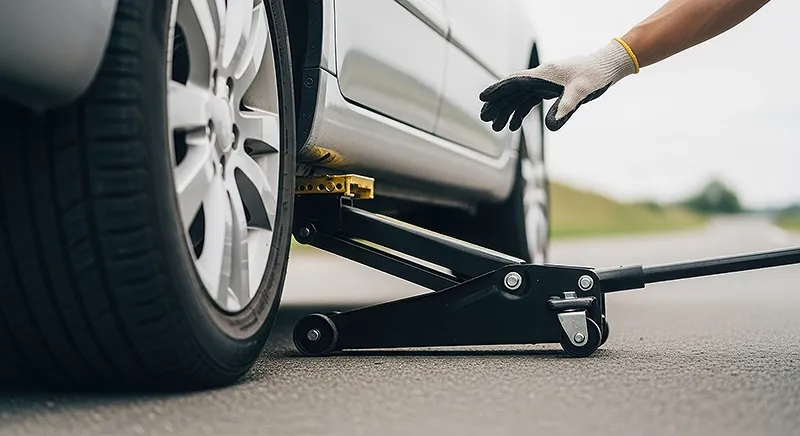
- Get out your spare tyre, jack and wheel brace. Check your car manual for the correct jack points, using the wrong spot can damage the car.
- Before you jack the car up, loosen the wheel nuts on the flat tyre slightly – about a half turn each. Don’t remove them yet.
- Position the jack under the correct point and raise the car until the flat tyre is about 15cm off the ground.
- Remove the wheel nuts fully and keep them somewhere safe. Take off the flat tyre and put the spare on.
- Hand-tighten the wheel nuts in a star pattern (not in a circle) to ensure even pressure.
- Lower the car back down and tighten the nuts fully with the wheel brace, again in a star pattern.
- Check the spare tyre’s pressure label before driving, space-saver spares require much higher pressure than a standard tyre and usually carry a maximum speed of 80km/h. Remember to get your original tyre repaired or replaced as soon as possible.
Don’t attempt it if you’re on a motorway, in the dark, in bad weather or don’t have a spare. Call Roadside Assistance, tyre assistance is included.
What to do if you put the wrong fuel in your car or run out of fuel
Misfuelling, putting diesel in a petrol car or petrol in a diesel, happens more than people admit – especially after a long shift if your brain is running on autopilot. The most important rule is not to start the engine. Even turning the ignition can push contaminated fuel through the system and turn a fixable situation into a very expensive repair. Instead:
- If you’re still at the pump, do not start the car. Tell the petrol station staff immediately.
- If you’ve already driven away, pull over as soon as it’s safe and turn the engine off.
- Put the car in neutral if possible and call Roadside Assistance. Wrong fuel recovery is covered.
- Do not try to drain it yourself. Fuel systems are complex and this is a job for a professional.
The same applies if you’ve simply run out of fuel. Pull over safely and call for help, fuel delivery is included in MAS Roadside Assistance. .
What to do if you lock your keys in the car
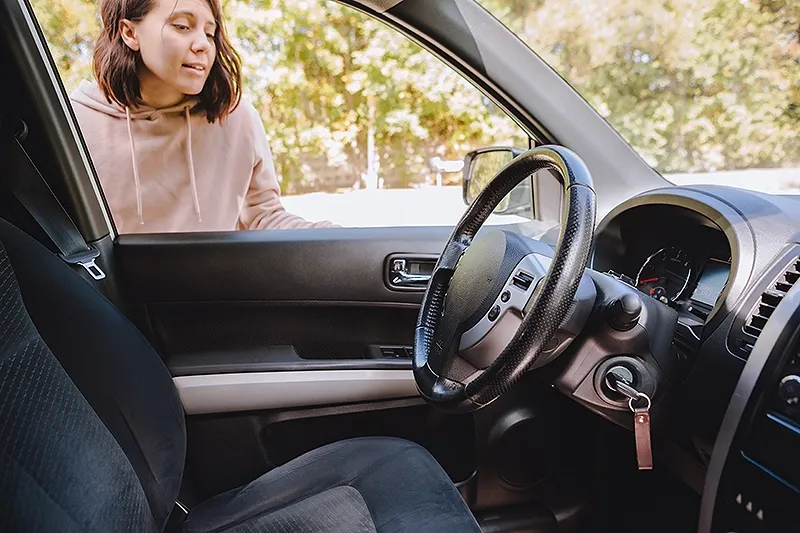
Few things are more frustrating than watching your keys sitting on the driver’s seat through the window.
- Check all the doors and the boot, occasionally one is unlocked.
- Check whether anyone else has a spare key who could reach you.
- If neither option works, call Roadside Assistance. Lockouts and broken or lost key retrieval are covered. You don’t need a locksmith or to damage your car to get in.
What to do if your EV runs out of charge
Running out of charge in an electric vehicle is the modern equivalent of running out of fuel and is increasingly common as more New Zealanders make the switch.
- Pull over safely as soon as you notice your charge is critically low. Don’t wait until the car stops.
- Turn off any non-essential systems, like air conditioning and heated seats, to preserve the remaining charge.
- Turn on your hazard lights and call Roadside Assistance. Emergency EV charging and towing to the nearest charging station are both covered.
What to do if your engine is overheating
Engines overheat for all sorts of reasons (e.g. a coolant leak, a faulty thermostat, a blocked radiator) and whatever the cause, it's not something to push through. If your temperature gauge is climbing, a warning light appears, you notice steam from the bonnet or a sweet unusual smell, pull over as soon as you safely can.
- Turn off the air conditioning immediately, it puts extra load on the engine. Turn the heater to full heat instead, which can help draw heat away from the engine.
- If the temperature keeps rising, pull over as soon as it’s safely possible, turn off the engine and let it cool down. Do not keep driving.
- Once stopped, open the bonnet to let heat escape but do not open the radiator cap. On a hot engine the coolant is pressurised and can spray out causing serious burns. Wait at least 30 minutes for the engine to cool before touching anything.
- Once the engine is cool, check the coolant reservoir. If it’s empty or very low, top it up with coolant or water as a temporary measure. But get it checked by a mechanic as soon as possible, as a low coolant level usually means there’s a leak.
- If steam is coming from the engine or you’re unsure of the cause, call Roadside Assistance. Towing to the nearest repairer is covered.
What to do if you have low engine oil
Running low on oil can cause serious engine damage very quickly, so it's worth knowing the signs. An oil pressure warning light on your dash, a ticking or knocking sound especially on startup, the engine running roughly or a burning smell coming from under the bonnet.
- Pull over as soon as it’s safe to do so and turn off the engine. Do not keep driving, even a few kilometres on critically low oil can cause permanent engine damage.
- Wait a few minutes for the oil to settle, then check the dipstick. Your car manual will show you where it is. The oil level should sit between the minimum and maximum marks.
- If the oil is low, top it up with the correct grade of oil for your car. A litre of oil is usually enough to bring the level back up.
- If the oil level looks fine but the warning light is still on or if you’re still hearing knocking sounds, do not restart the car. Call Roadside Assistance, this could indicate a more serious issue with your oil pressure system.
Be prepared before something goes wrong
Knowing what to do in a breakdown is half the battle, having a few basics in your car makes the other half a lot easier. At a minimum, make sure you have a phone charger, know your vehicle’s registration plate off the top of your head and save your Roadside Assistance number in your phone now – before you need it. For a full list of what we recommend keeping in your car for emergencies, read our guide to what every driver should have on board.

Are you a MAS Member with Motor Vehicle Insurance?
Your MAS Roadside Assistance is ready to go from 1 April 2026. No sign-up needed, just there when you need it. Save 0800 800 627 in your phone now. Because, when life happens, it helps to be in good hands. Eligibility criteria applies, see terms and conditions for more information.
MAS Roadside Assistance is provided by AA Roadservice. There is no applicable excess to use any standard AA Services. However, some of the services that require additional support or technical assistance outside of the standard AA Services may require an up-front cost to be covered by the Driver.
Not yet a MAS Member? See what’s built into MAS Motor Vehicle cover.
This article provides general information only and is not intended to constitute legal or financial advice. Before taking out any insurance product, you should carefully consider the terms and specific policy wording. Underwriting criteria will apply.